
When most business owners ask “what is included in Orlando office cleaning,” they’re not really asking about mops and microfiber cloths. They’re asking something deeper: If I hand this off to a cleaning company, what exactly am I getting — and what am I still responsible for?
That’s the right question. And it’s one that far too many businesses figure out the hard way — after signing a contract, assuming everything will be handled, and then discovering three months in that the breakroom floor is spotless but the light switches haven’t been wiped since the previous administration, or that the restrooms smell fine but the carpet is accumulating the kind of grime that only a deep extraction can fix.
The confusion isn’t always the cleaning company’s fault. The cleaning industry does a poor job of standardizing what “office cleaning” means. One company’s standard package is another’s premium service. What’s included at a firm in Winter Park might not match what’s offered to a similar business in Sanford. And the terms — office cleaning, janitorial service, commercial cleaning — get used so interchangeably that most buyers don’t realize they might be shopping for different things.
This guide fixes that. We’re going to walk through every area of a professional office, explain exactly what should be covered in a standard cleaning service, where the scope ends and add-ons begin, and how the terms used in this industry actually differ from one another. By the time you finish reading, you’ll know exactly what to expect from any cleaning company you evaluate — and exactly what questions to ask before you sign anything.
What a Professional Office Cleaning Service Should Cover
There is a core set of tasks that should appear in virtually every standard office cleaning agreement. These aren’t extras or premium features — they’re the baseline that separates a professional service from someone who shows up with a mop and calls it a day. Understanding this baseline is your first line of defense against under-delivery.
The Restrooms Come First — Always
If a cleaning company’s approach to your office doesn’t prioritize the restrooms above everything else, that’s a problem. Restrooms are where bacteria travel fastest, where client impressions are made or broken in a matter of seconds, and where inadequate cleaning has the most direct impact on employee health. A professional cleaning service treats every restroom visit as a full sanitization — not a wipe-down.
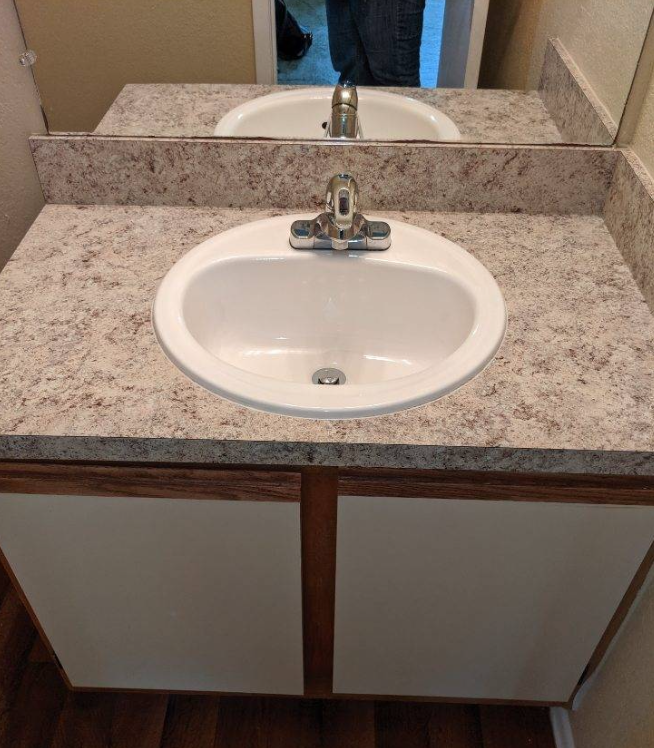
In a properly executed restroom clean, every toilet and urinal gets scrubbed inside and out, including under the rim where buildup hides and standard cleaning routinely misses. Sinks, faucets, and countertops are cleaned and disinfected, not just rinsed. Mirrors are polished streak-free. Floors are mopped with a disinfectant solution — and with a mop dedicated exclusively to restroom use, never shared with common areas. Trash is emptied and relined. Supplies — soap, paper towels, toilet paper — are restocked, not just checked.
In Orlando’s humidity, this last point matters more than it does in most cities. Mold and mildew can develop on damp restroom surfaces within 24 to 48 hours under the right conditions. A cleaning company that wipes surfaces without ensuring they dry properly, or that skips grout lines and floor corners, is leaving your restroom vulnerable to problems that are both expensive and genuinely unhealthy for everyone in the building.
The Breakroom Is Your Second Priority
The breakroom is where your team recharges — and where cleaning failures show up fastest. Food residue accumulates on counters and in microwaves. Spills happen under appliances where standard cleaning routinely doesn’t reach. Odors build up in trash cans, sink drains, and refrigerator seals. And in Florida’s warm, humid environment, these conditions attract pests faster than in cooler climates.
A thorough professional cleaning of a breakroom covers the countertops from edge to edge — not just the clear spaces — along with the exterior surfaces of every appliance present. The microwave interior deserves particular attention because it’s one of the most used and least cleaned surfaces in most office kitchens. The sink gets scrubbed, not rinsed. Tables and chairs — including seat backs, armrests, and chair legs — are wiped down and disinfected. Cabinet fronts and drawer pulls, which accumulate fingerprints and food residue from constant contact, are wiped clean. Trash is emptied and the area under and around the trash can is addressed, because residue accumulates there too. The floor is mopped last.
What’s typically not included in standard breakroom cleaning, and what you should ask about specifically: washing dishes left in the sink, cleaning the interior of the refrigerator, and cleaning behind or underneath appliances that haven’t been moved. These are legitimate add-on services but they don’t belong in a standard agreement unless you’ve specifically requested them.
Common Areas and Your Lobby Set the Tone
Your lobby is doing sales work every time a client walks through the door. It communicates your standards before you say a word. A well-maintained lobby signals a well-run business. A lobby with dusty shelves, smudged glass, and a floor that hasn’t been mopped since last week communicates something else entirely — and clients notice even when they don’t say anything.
Standard cleaning in common areas and lobbies covers vacuuming or sweeping all floor surfaces, mopping hard floors, dusting all reachable surfaces including shelves and décor, cleaning glass entry doors and any interior glass or partitions, wiping down reception desks and counters, disinfecting high-touch points like door handles and push plates, and emptying all trash with liner replacement. Furniture should be straightened, not just cleaned around. Baseboards and door frames should be spot-cleaned on a rotating basis — not on every visit necessarily, but consistently enough that they don’t become visible.
What happens in your lobby when a cleaning crew falls behind or cuts corners is that the floor gets mopped but the glass is ignored, or the surfaces get dusted but the high-touch points don’t get disinfected. A quality cleaning agreement specifies every task individually so there’s no ambiguity about what’s being done.
Private Offices and Workstations Require Care and Respect
Private offices present a different kind of challenge than common areas. Cleaners are working in personal spaces, around individual belongings, sensitive documents, and sometimes expensive equipment. The standard for how this work gets done is not just about cleanliness — it’s also about trust.
A professional cleaning crew working in private offices dusts all surfaces, wipes down monitors and equipment with appropriate materials (not wet cloths on screens), disinfects phones, keyboards, and mice, empties and relines trash cans, cleans light switches and door handles, and vacuums or mops the floor including under and around the desk. What they should never do is move or discard personal items, rearrange documents, or touch anything that looks like it might have value or importance without being specifically asked to.
The distinction between cleaning around someone’s belongings and organizing them is important. Cleaning is not organizing. If you want a cleaning company to straighten personal workspaces, organize papers, or sort items on desks, that’s a separate service conversation — and a reasonable cleaning company will tell you so upfront rather than either doing it without permission or ignoring it and hoping you don’t notice.
Floor Care Connects Everything Else
Floors take the most consistent abuse of any surface in an office environment — especially in Central Florida, where staff and clients track in a rotating cast of outdoor debris depending on the season. Spring brings pollen and rain. Summer brings sand and mud. Construction zones, which are seemingly everywhere in the Orlando metro right now, contribute dust and debris that standard floor care has to address constantly.
In a professional cleaning service, carpeted areas are vacuumed on every visit using commercial-grade equipment with proper filtration. This matters more than it sounds: a vacuum without HEPA filtration doesn’t remove fine particles from carpet fibers, it just redistributes them back into the air. Hard surface floors are swept or dust-mopped first to collect loose debris, then mopped with an appropriate cleaner for the floor type. The distinction between tile, luxury vinyl plank, hardwood, and concrete flooring matters when it comes to what products are safe to use — a quality cleaning company knows this and uses the right chemistry for each surface.
What’s not included in routine floor care: deep carpet extraction or steam cleaning, floor stripping and waxing, grout cleaning, and hardwood refinishing. These services are real and worth scheduling periodically, but they’re priced and planned separately from routine cleaning.
High-Touch Surface Disinfection Is Not Optional
This is worth calling out separately because it’s the category most commonly missed by companies doing a surface-level job. High-touch surfaces — door handles, light switches, elevator buttons, shared equipment controls, conference room remote controls, reception counters — accumulate far more contamination than most visible surfaces because they’re touched by dozens of hands throughout the day, rarely cleaned between cleaning visits, and almost never thought about during basic tidying.
A professional cleaning service addresses high-touch surfaces on every visit as a standard task, not as an add-on. The product used matters too: disinfectants need dwell time — time to sit on the surface wet before being wiped — to actually kill pathogens. A cleaner who sprays and immediately wipes has applied product but hasn’t disinfected anything in a meaningful way.
What Is Not Included in Standard Office Cleaning
Understanding where the scope ends is just as important as knowing what’s covered. The most common source of disagreement between businesses and cleaning companies is unmet expectations around tasks that the client assumed were included and the company assumed were out of scope.
- Deep cleaning services — carpet steam extraction, pressure washing, upholstery cleaning, full interior window washing — are almost always priced and scheduled separately from routine cleaning. They require different equipment, more time, and often specialized training. Post-construction cleanup is another category entirely: the debris left after renovation work involves different hazards, different materials, and significantly more labor than routine cleaning ever does.
- Exterior cleaning — parking lots, building facades, outdoor furniture, sidewalks — is outside the scope of office cleaning entirely. Biohazard cleanup, which involves any material that poses a biological risk, requires certified professionals and is never part of a standard cleaning agreement. Organizing, decluttering, or sorting is not cleaning. And dish washing, unless specifically negotiated and added to your agreement, is the responsibility of the people who created the dishes.
- None of these exclusions are unreasonable. They just need to be understood clearly before you sign anything, so that you’re not surprised when the renovation debris is still sitting in the corner after your first cleaning visit.
Office Cleaning, Janitorial Service, and Commercial Cleaning: A Practical Distinction
These terms show up constantly in searches and ads, often used as if they mean the same thing. They don’t, and the differences matter when you’re deciding what to hire.
Office cleaning is exactly what it sounds like — professional cleaning services designed for office environments, performed on a scheduled basis by an outside contractor. It’s the category most Orlando businesses are shopping for when they start this search.
Janitorial service typically refers to ongoing, on-site maintenance — often performed during business hours by someone who functions more like a building staff member than a visiting contractor. A janitor might be present throughout the day, available to handle spills, restock supplies, and respond to immediate needs as they arise. Janitorial work is more reactive and continuous; office cleaning is more scheduled and comprehensive.
Commercial cleaning is the broadest term, covering cleaning services for any commercial property — offices, retail, warehouses, medical facilities, hospitality, and more. When a company says it offers commercial cleaning, it means it serves businesses rather than residences. For most business owners looking for help with their Orlando office, commercial cleaning and office cleaning are effectively the same market, and the terms can be used interchangeably when you’re searching for vendors.
Five Questions That Will Protect You Before You Sign a Cleaning Contract
Most cleaning agreements are straightforward. But the ones that aren’t tend to fail in predictable ways — vague scope, missing insurance, no accountability mechanism, and no clear path to resolution when something goes wrong. These five questions address all of the above.
The first thing to ask any cleaning company is what exactly is included in their standard service — and to get the answer in writing as a checklist, not a paragraph of marketing language. Vague answers and reluctance to commit to specifics are red flags.
Second, ask whether their cleaners are employees or independent contractors. This matters for liability, consistency, and your protection if something goes wrong. A company staffed by trained employees is generally more accountable than one that contracts out to whoever is available.
Third, ask for their certificate of insurance — general liability and workers’ compensation, both current. A cleaning company operating without proper insurance is a liability risk for your business, not just theirs.
Fourth, ask about the products they use. If you have employees with allergies, chemical sensitivities, or respiratory concerns, or if your office has specialty surfaces that require specific care, you need to know this before the first visit.
Fifth, ask what happens if you’re not satisfied with a cleaning visit. A reputable company will have a clear, documented re-cleaning policy. If a company won’t commit to making it right when something falls short, you’ve learned something important about how they’ll handle problems after you’ve signed.
What Brilliant Maid Includes — And How We Handle the Details
Brilliant Maid LLC has been cleaning offices across the Orlando and Central Florida area for over seven years. In that time, we’ve learned that the businesses with the best experiences are the ones where expectations are set clearly from the beginning — so that’s exactly how we operate.
Every client engagement starts with a walkthrough of your space. We’re looking at your restroom count, floor types, equipment, traffic patterns, and the specific areas that matter most to your business. From that walkthrough, we build a written scope of work — a detailed checklist of every task, every room, and every frequency. You know exactly what’s happening on every visit before the first cleaner walks through your door.
Our standard service covers full restroom sanitization, breakroom and kitchen cleaning, lobby and common area maintenance, workstation cleaning and high-touch disinfection, carpet vacuuming, hard floor sweeping and mopping, and trash removal with liner replacement throughout. We staff our teams with trained, consistent employees — not rotating contractors — and we carry full insurance and bonding on every job.
We serve businesses across Orlando, Casselberry, Winter Park, Sanford, Lake Mary, Altamonte Springs, and surrounding communities throughout Central Florida. If you’re in the area and looking for office cleaning that delivers what it promises, we’d like to talk.
The Business Case for Getting This Right From the Start
There’s a version of this conversation that happens after things have already gone wrong — after a client noticed something, after an employee brought up the restroom smell, after a carpet that should have lasted twelve years started looking tired at eight because it was never properly maintained. The businesses that avoid that conversation are the ones that took the time to understand exactly what they were buying before they committed to it.
Office cleaning is not a commodity. The difference between a company that checks boxes and one that actually delivers a consistently clean workspace shows up in employee health outcomes, in the impressions your clients form, and in the longevity of the physical space you’ve invested in. Getting clear on what’s included — before the contract is signed — is how you make sure you’re getting the second kind of service, not the first.
Frequently Asked Questions
- What does a standard office cleaning service include? A professional standard service covers restroom sanitization, breakroom cleaning, trash removal and liner replacement, vacuuming, floor mopping, surface dusting, and high-touch disinfection on every scheduled visit.
- What’s the difference between office cleaning and deep cleaning? Routine cleaning maintains your office at a consistent standard on a regular schedule. Deep cleaning addresses areas and levels of buildup that routine cleaning doesn’t touch — carpet extraction, grout scrubbing, interior window washing, and detailed cleaning of surfaces typically skipped during standard visits.
- How long does office cleaning take? For a single cleaner, expect roughly 1.5 to 2 hours for a 1,000 square foot office. Larger spaces are typically handled by a crew and timed to match your schedule.
- Do office cleaners wash dishes? Not as part of standard service. Dish washing is a common add-on but needs to be specifically requested and included in your agreement.
- Should office cleaning happen during or after business hours? Most businesses prefer after-hours cleaning to avoid disruption. Brilliant Maid accommodates both morning and evening scheduling based on your preference.
Ready for a Clean That Actually Delivers?
You’ve built something worth showing off. Your office should reflect that. At Brilliant Maid LLC, we’ve spent seven years getting this right for businesses across Central Florida — with a 4.9 Google rating and a written scope of work on every job.
Call us today at 407-710-9600 to talk through what your office actually needs.
Or book directly online: https://www.brilliantmaid.com/booking-page/
Serving Orlando, Casselberry, Winter Park, Sanford, Lake Mary, Altamonte Springs, and all of Central Florida.
Brilliant Maid LLC | Licensed, Insured & Bonded | 4.9 Google Rating | 7+ Years Serving Central Florida